Incorporating Knowledge Management within the Construction Industry of the Mauritian Economy : A Qualitative Approach
Article Sidebar
Main Article Content
Abstract
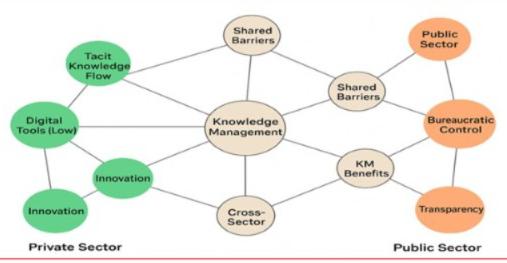
The construction industry plays a critical role in Mauritius’s economic development, contributing significantly to GDP and employment. Despite its importance, the sector faces persistent challenges such as project delays, cost overruns, inefficiencies, and limited collaboration among stakeholders. Knowledge Management (KM) has emerged globally as a strategic approach to address these issues by enabling systematic creation, sharing, and application of knowledge within organizations. This study investigates the current state of KM practices in the Mauritian construction industry, identifies barriers to effective implementation, and explores the potential benefits of integrating KM strategies to enhance project outcomes. A qualitative research design was employed, involving semi-structured interviews with ten project managers equally drawn from public and private sectors. These interviews were complemented by secondary data sources, including industry reports and relevant literature. Findings indicate that while KM is recognized as strategically important, its application remains fragmented. Private sector firms demonstrate informal, innovation-driven KM practices, often relying on tacit knowledge and ad hoc processes, whereas public institutions emphasize formal, document-centered systems with limited mechanisms for reflection or reuse. Barriers to effective KM adoption include cultural resistance, knowledge hoarding, bureaucratic rigidity, technological constraints, and limited training. Based on these insights, a “Mauritian Construction KM Framework” is proposed, encompassing five interconnected pillars: leadership and governance, knowledge culture, technology and infrastructure, process and practice, and learning and continuous improvement. Short-term, medium-term, and long-term actions are outlined to enhance KM literacy, institutionalize practices, and integrate digital tools such as Building Information Modelling (BIM) to support knowledge sharing and decision-making. The adoption of this framework is expected to strengthen collaboration, improve efficiency, reduce errors, and foster a culture of continuous learning and innovation within the Mauritian construction sector. This research provides both practical and theoretical contributions, offering actionable strategies for policymakers, industry professionals, and organizations seeking to leverage KM as a strategic enabler for sustainable development and competitive advantage.
Article Details

This work is licensed under a Creative Commons Attribution-NoDerivatives 4.0 International License.