FinTech-Enabled Microfinance for Last-Mile Communities: A Pathway Toward SDG 1 and SDG 8
Article Sidebar
Main Article Content
Abstract
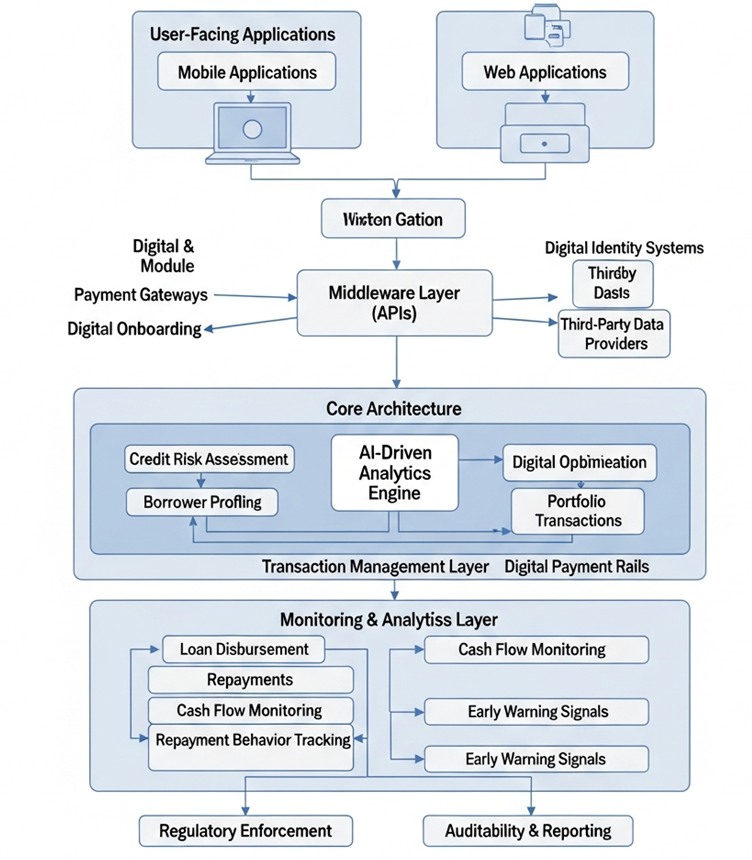
Microfinance made possible through FinTech has become an effective catalyst of financial inclusion to last-mile communities and a plausible route to Sustainable Development Goal (SDG) 1 (No Poverty) and SDG 8 (Decent Work and Economic Growth). Through digital payment solutions, mobile banking, AI-based credit check, and data analytics, FinTech can minimize the structure, i.e., geographic isolation, the absence of formal credit history, and elevated transaction rates. This digitalization enhances the ability of the microfinance institutions to provide affordable, scalable and inclusive financial services, which contribute to livelihood creation and economic resiliency of locals. Although the world is making strides in financial inclusion, last-mile communities are still overrepresented in the informal financial framework. Microfinance models Traditional models of microfinance are inefficient in their operations, have limited reach, are characterized by high default risk, and rely on manual processes. These limitations limit access to credit, savings, and insurance products on a timely basis and therefore limit entrepreneurial activities and sustainable production of employment. The existing literature tends to separate FinTech innovation and the development of microfinance, with little conceptualization of the two at an SDG-based level of critique. Evidence of the linkage of FinTech-enabling models of microfinance with quantifiable results on poverty alleviation and decent work in underserved areas is lacking. The current paper suggests a hybrid FinTech-microfinance model that builds on mobile apps, digital identities, risk scoring based on artificial intelligence, and real-time tracking to improve its outreach and financial sustainability. It contributes to the fact that technological innovation was aligned with the SDG indicators, showed better outcomes in income stability, growth of micro-enterprises, job creation, and inclusive economic development, thus contributing to SDG 1 and SDG 8.