
Micro-Enterprise Development Through Food Tourism: A Study of Local Producer and Vendor Ecosystems
Article Sidebar
Main Article Content
Abstract
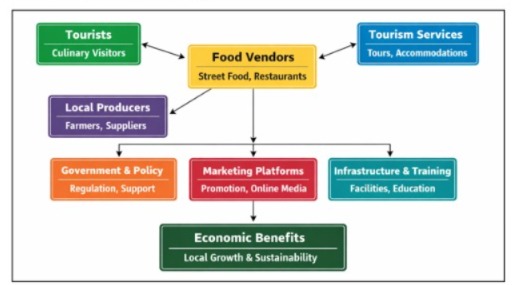
Food tourism has become one of the strongest drivers of the local economic development, especially in terms of the growth of micro-enterprises run by small producers and vendors. This paper will examine how food tourism can enhance the local producer/vendor ecosystem and its role in enhancing micro-enterprise development in tourism destinations at a regional level. The research will examine the interaction of the local food systems and tourism demand and the ways in which these interactions affect the generation of incomes, creation of job opportunities, and development of the value chain of the regions. It uses a mixed-method research design, which is a combination of field observations, structured surveys of local food vendors and producers, and secondary tourism data analysis. The research creates a conceptual food tourism ecosystem framework that visualizes the relationships between the tourists, vendors, producers and the supporting institutions. In addition, an analytical framework in the form of an algorithm is suggested that will be applied to simulate the interactions between vendors and producers networks, align the demand of tourism with local foods, and calculate a score of economic impact of various micro-enterprises. These results reveal that food tourism is a critical boost to production diversification, market awareness of the traditional food items, and closer integration between the agricultural suppliers and tourism-based sellers.