
Unpacking Standardization in Agent Network Training: Towards an Integrative Framework for Digital Financial Services
Article Sidebar
Main Article Content
Abstract
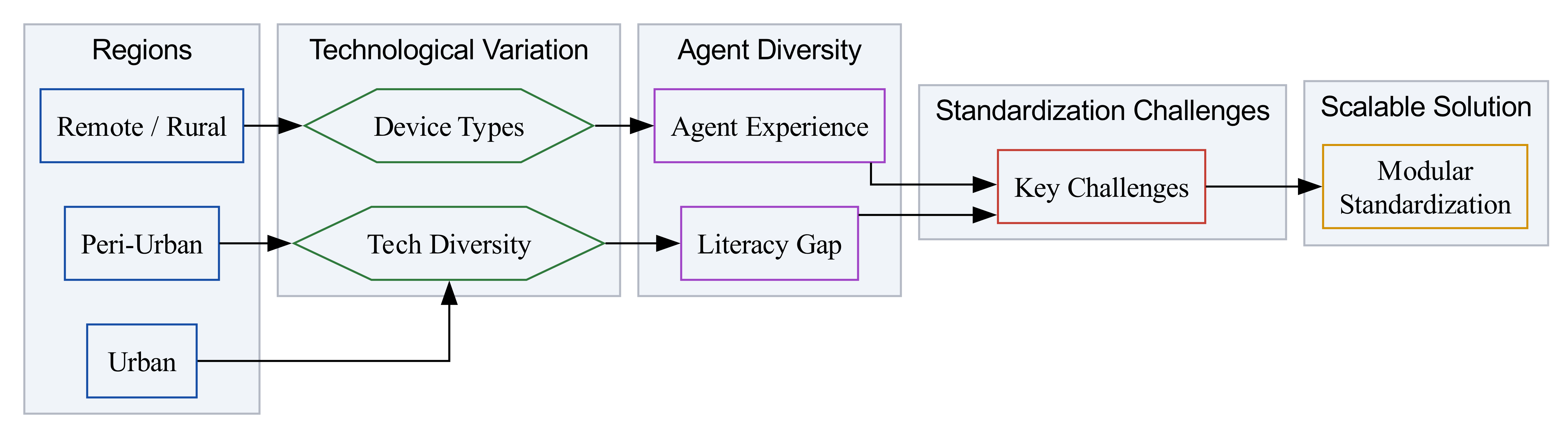
Those FinTech’s which want to reach trusted DFS and those even in regions where a broad number of DFS agents may be available and a large variety of levels of computer-literacy exist, need to address successfully how to train their agents. This research has reviewed existing evidence base on training modalities and tools and adult learning theories that are applicable to digital financial services and specifically to the cash in/cash out equation in which agent capacity is a significant factor. Adopting an integrated framework development and a structured analytic review process, this research integrate work among, agent distribution channel, and inclusive training designs, and distil four essential logistics of effective agent training: modular content delivery, multimodal delivery vehicles, onsite adaptation, and continuous support. Furthermore, it provided with a taxonomy of contextual and agent factors to influence member learning outcomes and instruction on how to implement scalable and adaptive training. The last integrated model depicts the pragmatic importance and ‘absorption’ of such a model in practice and also reflects industry considerations including, the adoptability by fintech’s, the potential to cater for different literacy levels, improving agent retention and service consistency. These findings offer a basis for providers to customize agent on-boarding and skills enhancement to compliance and consumer protection needs and for policy makers to set norms that support financial and inclusion ecosystems that are safe for all customers. Lastly, this paper adds on proof based solution to sustained growth and improved quality of agent networks in remote and under-served areas.